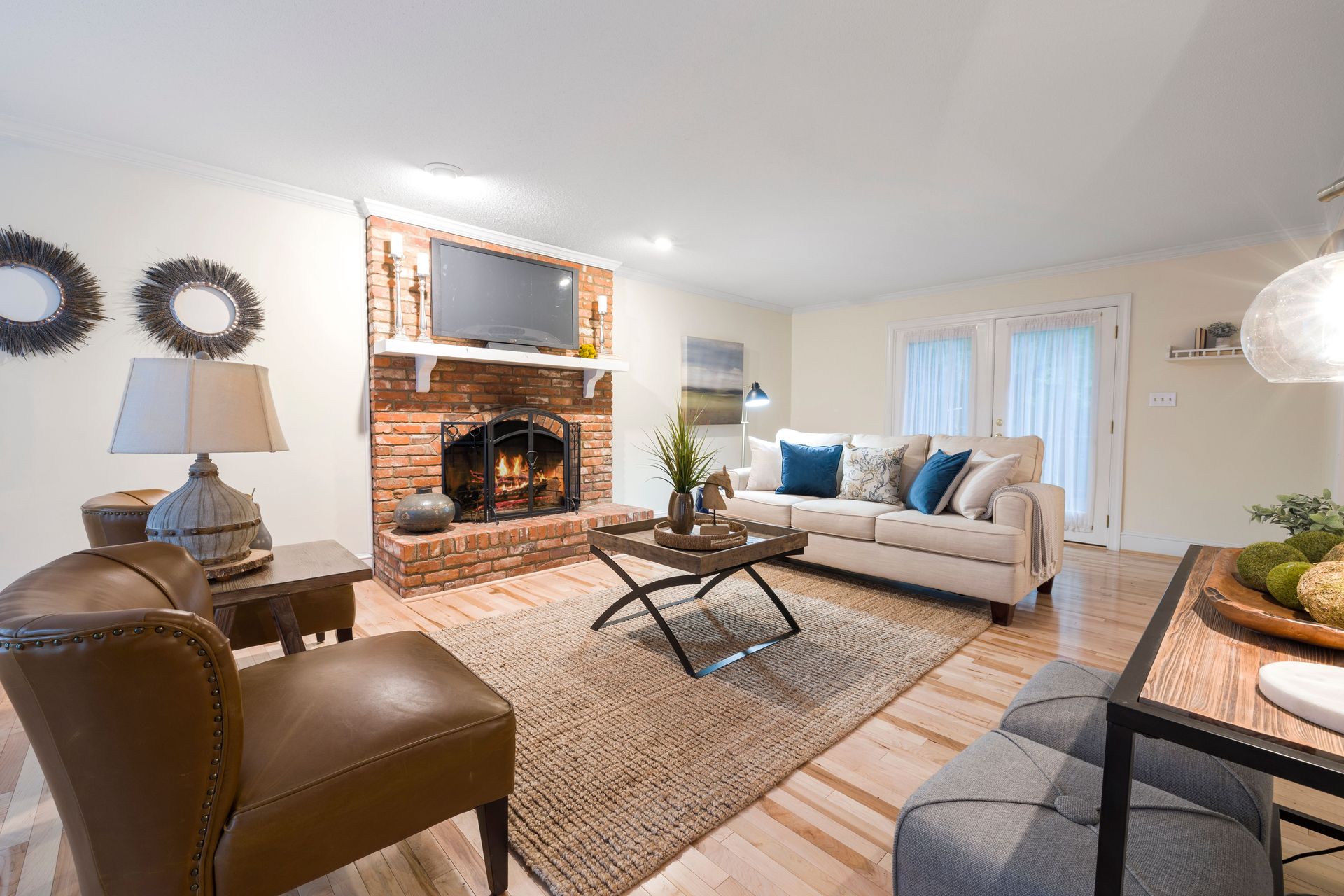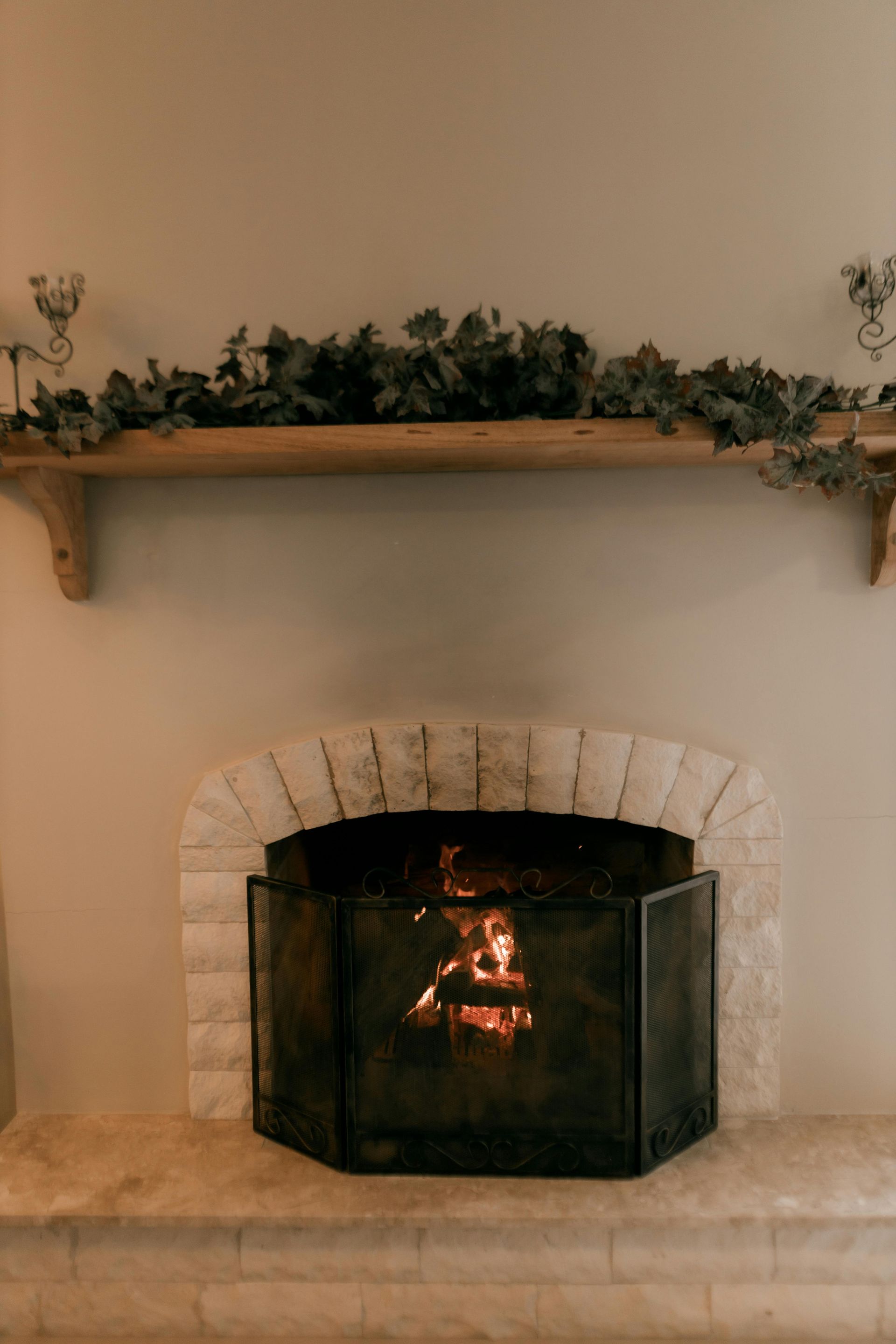
If you have a wood-burning fireplace you barely use, you are not alone. Between hauling logs, cleaning ash, and the annual chimney sweep, a lot of Utah homeowners find the real-fire romance wears off fast. Converting to gas keeps the fireplace you already have and trades all that work for instant heat at the push of a button.
Here is what a wood to gas conversion involves, what it tends to cost, and what to expect from start to finish.
What converting to gas actually means
You have two main paths, and the right one depends on your fireplace and how you want to use it.
- Gas insert: a sealed unit that slides into your existing firebox and vents through your chimney. This is the most efficient choice and the better heater, since it is a self-contained appliance built to push warmth into the room.
- Gas log set: a set of burner logs that sits inside the open firebox for the look of a wood fire with far less mess. Log sets cost less up front but put out less usable heat than an insert.
Both run on natural gas or propane, so homes around Elk Ridge and the rural south county work fine on propane when there is no gas line.
The conversion process, step by step
- In-home assessment. We look at your firebox dimensions, your chimney and venting, and whether you have gas or propane nearby.
- Recommendation and quote. We match an insert or log set to your space and your heating goals, then give you a firm price.
- Gas line and venting. If you do not already have a gas supply at the fireplace, a line is run. Inserts are fitted with the correct venting through the existing flue.
- Installation. The unit is set, connected, sealed, and the surround is finished so it looks built-in, not added on.
- Testing and walkthrough. We test the ignition, flame, and safety controls, then show you how to run it.
What a conversion costs
Most wood to gas conversions in Utah land somewhere in the low-to-mid four figures installed, with gas log sets on the lower end and full gas inserts higher, depending on the unit, the venting, and whether a new gas or propane line is needed.
That is a general range for planning, not a quote. The only way to get a real number is a quick look at your fireplace, and we are happy to come out and give you one.
Is converting worth it?
For most homeowners, yes. You gain instant, cleanup-free heat, you cut out the annual chimney sweep that wood requires, and a modern gas insert is far more efficient than an open wood fire, which sends most of its heat straight up the chimney. You also keep the fireplace as a real feature of the room instead of a spot you avoid using.
Frequently asked questions
Can any wood fireplace be converted to gas?
Most can. A masonry or prefab firebox with a usable chimney is a good candidate. The assessment confirms it and flags anything that needs attention first.
Do I need a gas line already?
No. If you do not have gas or propane at the fireplace, we can run a line as part of the project.
Will I still need chimney inspections after converting?
A gas insert does not produce creosote, so it is lower maintenance, but the unit and its venting should be checked once a year to keep it running safely.
How long does a conversion take?
Most installs are completed quickly once the unit is on hand. We will give you a clear timeframe along with your quote.
Ready to convert your wood fireplace to gas?
Love's Fireplaces is veteran owned, CSIA certified, and has spent over 20 years converting and servicing fireplaces across Utah County. Let us take a look and give you a firm number.