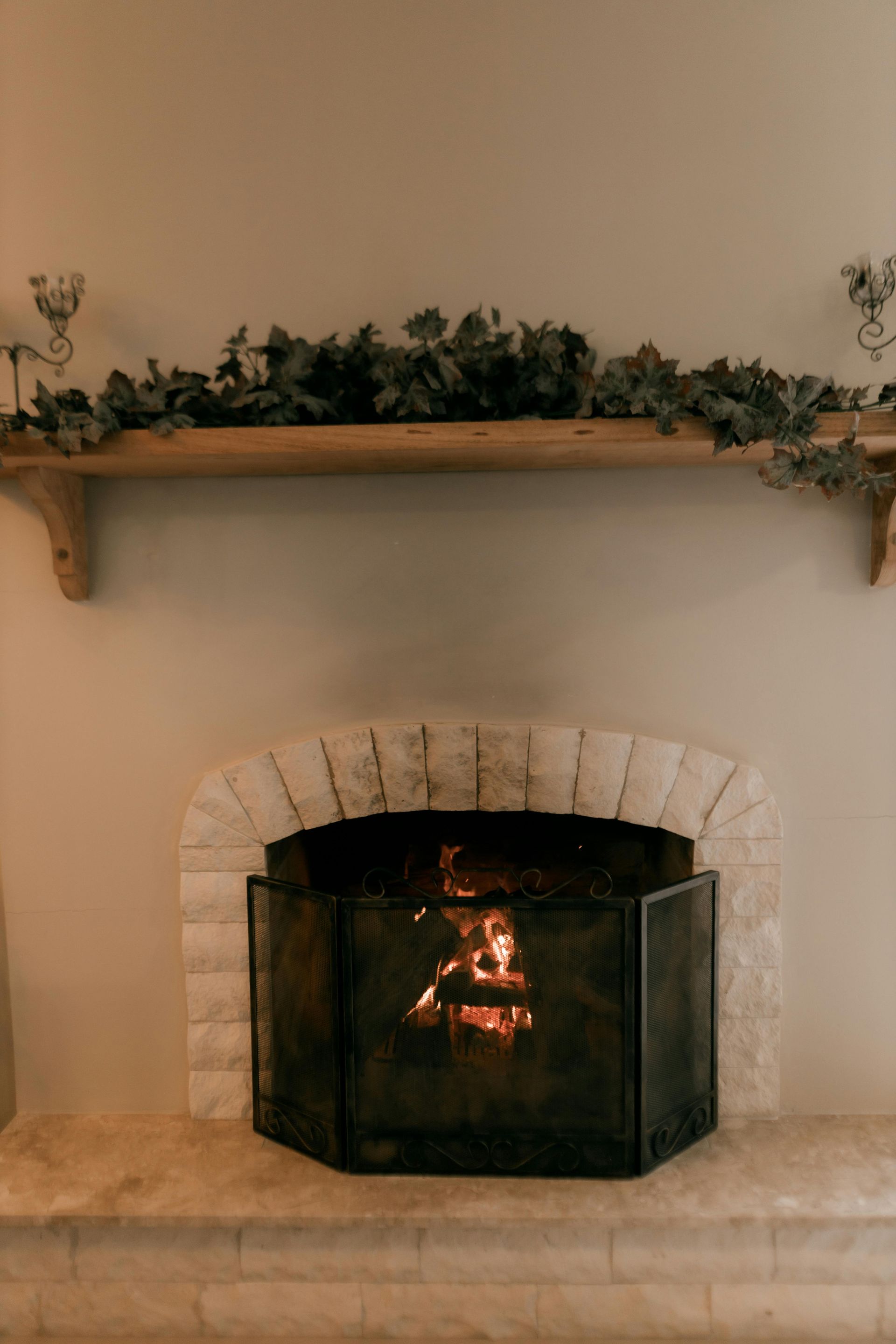
Utah winters do not ease in. One week it is fall, the next you want the fireplace going every night. A little prep before the cold hits means your fireplace is safe, efficient, and ready the first time you reach for it. Here is a simple checklist for both gas and wood fireplaces.
Before your first fire of the season
Whatever you burn, start here:
- Book your annual inspection early. Fall is the busy season, and getting on the schedule in late summer or early fall beats the rush.
- Test your smoke and carbon monoxide detectors, and replace the batteries.
- Clear the area around the fireplace of anything flammable.
- Check the exterior of your chimney for damage, loose caps, or signs of animals.
If you have a wood fireplace
- Schedule a chimney sweep and inspection. Creosote from last season needs to come out before you burn again.
- Have the flue, damper, and cap checked for buildup, blockages, and nests.
- Stock up on seasoned, dry firewood, and store it off the ground and away from the house.
- Make sure the damper opens and closes freely.
If you have a gas fireplace
- Schedule a service check of the burner, pilot or igniter, and venting.
- Clean the glass and clear dust from the logs and burner area.
- Test the ignition and confirm the flame lights and holds steady.
- If it runs on propane, check your tank level before the season.
Do not skip the safety basics
Carbon monoxide is odorless, so working detectors are not optional with any fuel-burning appliance. Confirm yours are within their service life, not just powered on. If your fireplace made any odd noises, smells, or draft problems last winter, get those looked at now rather than mid-season.
Beat the fall rush. The earlier you book your inspection, the more likely your fireplace is ready the first cold night, not two weeks after you needed it.
Frequently asked questions
When should I get my fireplace serviced?
Late summer or early fall, before you start using it. Early booking also avoids the seasonal backlog.
Do gas fireplaces need seasonal maintenance?
Yes. They are lower maintenance than wood, but an annual check of the burner, venting, and safety controls keeps them running safely and efficiently.
How do I know if my chimney needs cleaning before winter?
If it has been more than a year, or you see dark buildup or smell smoke, it is due. A professional inspection gives you a clear answer.
What is the one thing I should not skip?
Working carbon monoxide detectors. With any fuel-burning fireplace, they are your most important safety layer.
Get your fireplace winter-ready.
Love's Fireplaces is veteran owned, CSIA certified, and has spent over 20 years getting Utah County homes ready for winter. Book before the cold sets in.